
CHAPTER 9: RETRIBUTION AND CONTAINMENT
The cylinder bit down on the key with a dry, mechanical snap.
For a fractured half-second, the forty-two-hertz drone of the intake turbines seemed to funnel straight up the steel shaft into Mark’s arm. The lead core swallowed the frequency, the internal acoustic reeds aligning inside the housing like tumblers falling into place in a bank vault. Deep beneath the concrete skirt, an air piston hissed, venting three decades of stale, subterranean nitrogen into the muggy evening air.
The heavy cast-iron intake hatch popped two inches upward on spring-loaded hinges.
“Take him off the flange,” Harlan said. His voice had lost its measured bureaucratic calm, stripping away into something thin, immediate, and predatory.
The man in the utility cap moved fast, his work boots kicking through the loose pea gravel as his hand came clear of the canvas coat, gripping a heavy twelve-inch steel pipe wrench. But Eleanor Vance was already stepping into the gap.
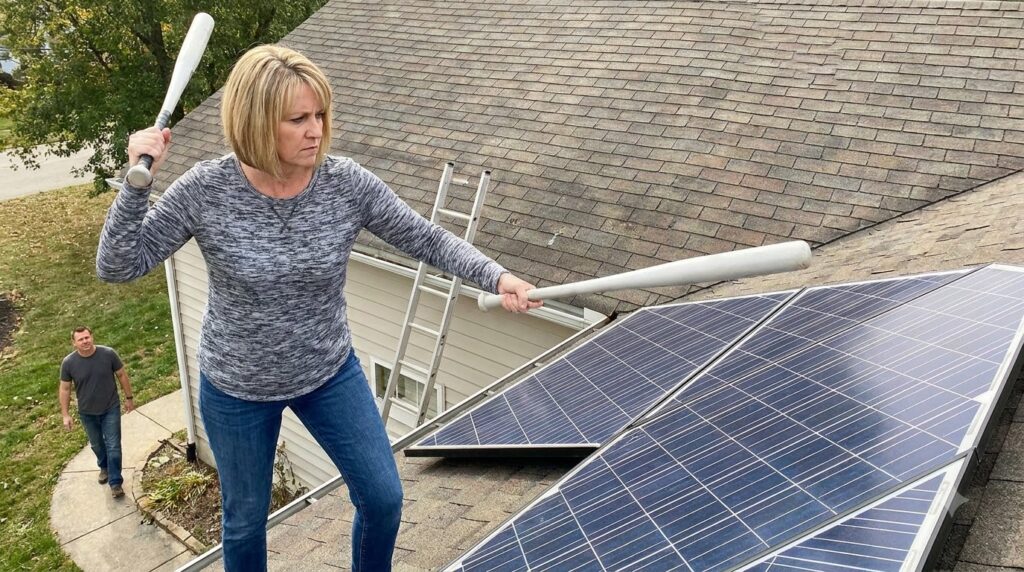
She didn’t swing wide. On the narrow concrete collar of the intake, an overhead arc would have cost momentum. She drove the dented barrel of the white baseball bat forward in a straight, horizontal thrust, the taped grip braced against her hip. The aluminum tip struck the center of the utility worker’s canvas chest with a hollow thump that knocked the air from his lungs. The man stumbled backward, his heel catching on the rusted chain-link tie wire, sending him sprawling into the sump gravel with a clatter of dropped steel.
Harlan didn’t reach down to help him. His eyes remained fixed on Mark, the amber roof strobe cutting across his lined face in flashing bars of dull yellow.
“You turn that terminal on, Mark, and you sign your own indictment,” Harlan said, taking two deliberate steps toward the open hatch, his leather shoes scraping hard against the concrete edge. “The transfer logs carry your signature. The forensic accountants don’t care about a kitchen table thirty years ago. They care about who owns the account.”
Mark didn’t look up at him. He seized the iron rim of the popped access hatch, hauling it back against its stops.
Beneath the heavy lid, bolted into the dry concrete recess five feet above the roaring subterranean water intake, was no rack of rotating magnetic disks. It was a single, rack-mounted optical reader, sealed inside a nitrogen-purged pelican chassis, completely air-gapped from the regional power grid. The internal battery bank was dead, but protruding from the faceplate was a primary interface ribbon identical to the one dangling from his roofline four hundred yards away.
Beside the optical port rested a faded, spiral-bound field notebook, wrapped in a clear polyethylene sleeve to protect it from moisture.
Mark pulled the notebook free. The handwriting on the waterproof cover was unmistakably his father’s—tight, measured, obsessive: Contingency Ledger: Mercer Regional Bonding Authority — 2008 to Present.
He flipped the cover. Taped to the first leaf was an original cashier’s check stub, dated twelve days after his eighteenth birthday, made out to Arthur Harlan — Private Escrow. Beneath it was an affidavit handwritten in blue ink, signed by David Vance and witnessed by Eleanor Vance three months before her sudden retirement.
“The signatures affixed to corporate bonds bearing the name Mark Vance were executed without the knowledge, presence, or consent of the named party, entered under coercive financial restructuring directed by Commission Chair Arthur Harlan.”
The words were plain, legally binding, backed by the physical serial stamps of the bond coupons recorded page after page.
“It was never a trust account,” Mark said, his voice quiet, slicing through the roaring air of the intake. He stood up slowly, the field book gripped in his left hand, his thumb hooked into the torn canvas of the oilcloth bundle. “You told him the firm was a tax shelter for my tuition. But every time you floated a municipal bond to cover the wastewater overrun, you routed the debt through his company, signed my name to the indemnification, and tapped our roof line to monitor the regional audit queries before they reached the township hall.”
Harlan’s jaw tightened, the muscles along his throat locking into rigid cords. “Your father was a partner, Mark. He took the fees.”
“He built a dead-man’s loop,” Eleanor said, stepping onto the concrete rim beside Mark, the white aluminum bat held low, resting against the denim of her thigh. “He spent eight years logging every mirror packet that passed through that array into this vault. The moment your truck drove down this gravel road with that winch, Arthur, the municipal server at county hall logged an unresolvable hardware failure on the utility relay.”
Harlan stared at the open hatch, then down at the notebook in Mark’s hand. The diesel truck behind him continued to idle, its radiator fan cycling on with a dull roar, but the silence between them on the concrete slab was absolute.
“You can’t prove intent from field notes,” Harlan said, though the words lacked the weight of his earlier threats. His gaze flicked toward the tree line, where the distant, high-pitched warble of state police sirens was finally drifting over the ridge from Route 4.
The emergency call from Mark’s phone had been interrupted, but an automated municipal distress ping on a public utility line brought state cruisers, not local dispatchers Harlan could control with an easement waiver.
“I don’t need to prove intent,” Mark said, closing the polyethylene cover of the notebook and tucking it into his coat. “The state examiners already have the audit queue. All they needed was the physical ledger to match the transactions on the severed flash drive.”
He turned away from the edge of the pit, leaving the heavy cast-iron lid gaping open to the night air. Eleanor matched his stride, walking half a step behind him as they passed the idling utility truck and moved toward the open gate leading to the road.
Behind them, the flashing amber strobes continued to paint the rusted steel of the pumping station in rhythmic pulses of gold, but the machine had stopped writing.