CHAPTER 3: The Weight of the Common Ground
The diesel exhaust didn’t drift over the lawn; it settled low, clinging to the damp grass like a gray shroud.
Marcus killed the engine of the pickup, but he didn’t step out. Through the windshield, the morning light caught the orange gleam of plastic utility flags driven straight through the edge of his gravel border. Two town-contracted surveyors in high-visibility vests stood near the drainage culvert, consulting a folded blueprint held flat against the hood of a white flatbed truck.
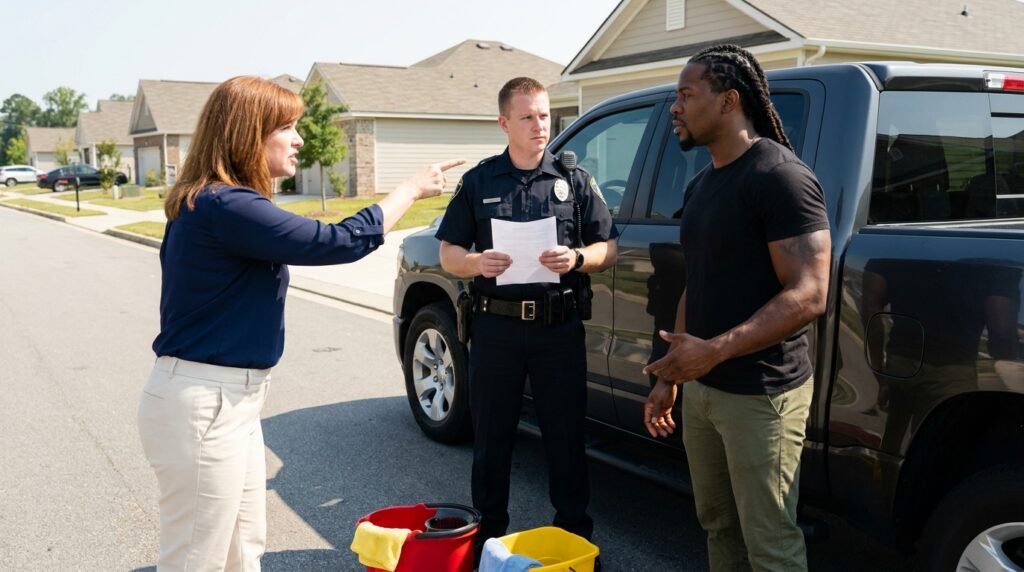
The front screen door of the house across the street banged shut. Eleanor didn’t wait for him to open his door. She crossed the asphalt with measured, deliberate strides, her cream-colored pants spotless, a laminated clipboard clutched against her navy blouse like a shield. Behind her came young Tyler, wiping sleep from his eyes, carrying a heavy-duty chain and a padlock.
Marcus pushed the truck door open, the hinge groaning in the morning quiet. The cold metal of the threshold bit into the back of his heel as he stepped down, his boots sinking an eighth of an inch into the soft earth of the border.
“You’re in violation of municipal code section twelve-B, Marcus,” Eleanor said, stopping four feet short of the bumper. Her voice was sharp, carrying easily across the dew-drenched lawns where other neighbors were beginning to peek through vertical blinds. “The secondary easement right-of-way has been officially reallocated for community utility infrastructure. This vehicle is obstructing commercial access.”
“Commercial access to what, Eleanor?” Marcus’s voice was flat, devoid of heat, grounded in the hard physical reality of the ground beneath him. “There’s nothing down this alley except a drainage ditch and my back fence.”
“There is an approved secondary parking and staging corridor for approved neighborhood contractors,” she retorted, gesturing to Tyler with a flick of her chin. “Start unloading the tools, Tyler. The board authorized municipal relocation of unauthorized private assets as of midnight.”
Tyler stepped forward, his face flushed with the nervous bravado of someone backed by an administrative badge he hadn’t earned. He reached for the tailgate latch, his fingers stretching out toward the cold steel where Marcus had spent an hour scrubbing grease the night before.
Marcus didn’t shout. He didn’t raise his hands. He simply closed the two paces between them, his heavy frame shifting forward with the slow, inexorable momentum of a retaining wall. He caught Tyler’s wrist inches from the handle, his grip tightening like a vice around the boy’s forearm. The movement was compact, defensive, absolute.
“Touch that latch again, Tyler, and you’ll need someone else’s hands to finish your landscaping,” Marcus said, his tone dropping into a low, metallic register that forced the boy to stumble backward off balance.
Eleanor flinched, her clipboard flying up as she stepped back, her face draining of its practiced authority. “Assault! You are recording this, right? He’s physically resisting municipal code enforcement!”
Marcus ignored her. He reached into his back pocket and pulled out the folded, yellowed survey map he had carried since dawn, unfolding it across the hood of his truck right over their municipal blueprint. The contrast was stark: neat, hand-drawn ink lines from nineteen-eighty-four against a sterile, computer-printed zoning map stamped three days ago.
“You can reallocate whatever you want on a computer screen,” Marcus said, his eyes locking onto Eleanor’s widening pupils. “But you can’t pave over a deed that predates this entire subdivision by forty years. And you certainly can’t sell parking rights on land your association never owned.”
Eleanor’s hand froze mid-gesture, the color draining from her lips as she stared down at the registry number scrawled in the margin of the old map—the exact serial number matching the audit log Officer Reyes had carried in his pocket the night before.