CHAPTER 3: THE BORDER ARCHIVE
“County Emergency Dispatch, what is the location of your emergency?”
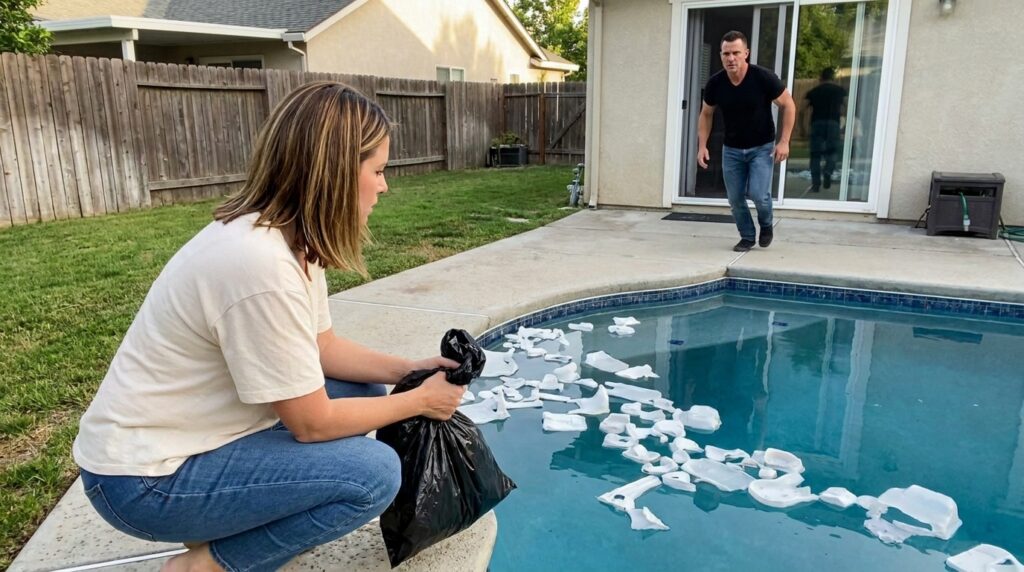
“Seven-four-two Westridge Court,” I answered, holding the phone flat against my ear without taking my eyes off Brenda’s hands. “I have an active criminal trespass and deliberate property destruction in progress. Perpetrator is on-site and refusing to vacate.”
“Are you insane?” Brenda hissed, her voice dropping into a venomous rasp. She didn’t bolt for the gate. A petty vandal runs the second dispatch answers; a woman convinced of her hereditary dominion plants her heels into the dirt. “Cancel that call right now, or I swear to God you won’t be able to sell this place for scrap when I’m through with the county board.”
“Sir, are weapons involved?” the dispatcher’s calm, digitized voice asked in my ear.
“No weapons. Physical trespass. Estimated structural damage to mechanical systems currently exceeding four thousand dollars. Perpetrator is my adjoining neighbor, Brenda Vance. Send a patrol unit.”
I tapped the screen, ending the call, and let the arm holding the phone drop to my side. The quiet returned, heavy and suffocating, thick with the smell of overheated copper from the fried pump motor and the sweet, resinous scent of my sun-warmed cedar fence.
That cedar fence was where this war had actually started six months ago.
When I closed on the estate sale in November, the property line between our lots was an open, overgrown swale of scrub oak and neglected lawn. The previous owner—an elderly widower who hadn’t walked outside in a decade—had let Brenda and her extended family treat the entire rear half-acre like a private annex of their lot. Her kids rode dirt bikes across the grass; her husband dumped grass clippings into the swale; and during the humid summer months, they used the aging concrete pool like a communal watering hole while the widower sat behind drawn curtains.
The first week I moved in, Brenda had appeared at my driveway with a plate of dry lemon bars and an unwritten list of expectations.
We’ve always kept the line open, she had told me, her smile tight around the edges, eyes already cataloging my moving boxes. The neighborhood likes the flow. We usually handle the pool maintenance together and share the weekends. It keeps things neighborly.
I had thanked her for the lemon bars, set them on the porch railing, and told her plainly that the pool was being decommissioned for a full private restoration and that a licensed contractor would be installing a six-foot privacy fence along the surveyed boundary line within the month.
The smile had vanished so fast it looked like an anatomical glitch.
You can’t do that, she had said, her voice flattening into the exact tone she was using right now by the water. There’s an established easement. There’s historical access.
There was no easement. I had spent two weeks in the county recorder’s basement reviewing the master deeds before putting down my earnest money. The parcel was clean, free of encumbrances, and bounded by iron survey pins buried four inches below the sod.
When the survey crew came in December, Brenda had marched out in an insulated parka, standing directly over the surveyor’s tripod, screaming that their laser levels were calibrated wrong. When the post-hole diggers arrived in January, she called code enforcement three times in four hours, claiming the concrete footings were violating setback ordinances. Every inspector who came out took one look at my stamped county permits, signed off on the inspection card, and drove away.
Then came the neighborhood email chains. The anonymous printouts left in my mailbox about “preserving community harmony.” The petition to the township board demanding a retroactive aesthetic freeze on new fence construction in Westridge subdivisions.
None of it worked because the law doesn’t run on suburban nostalgia. It runs on ink, deeds, and recorded metes and bounds.
And now, standing on my wet flagstone, she was holding the final, desperate move of someone whose institutional leverage had completely run dry.
“You think you’re very clever, don’t you?” Brenda said, her voice trembling with a mixture of rage and frantic calculation. She pulled the neon-orange slip from her back pocket, unfolding it with a crisp, violent snap. “You think you can hide behind your surveyor and your permits. But this is an official stop-use notification from the township drainage authority. This pool was built over a municipal retention zone. Every drop of water in that basin is a violation of the 1994 county master plat.”
I glanced at the heading of the document in her trembling fingers. The font was off. The township seal in the top left corner was slightly pixelated, copied from a public PDF website. And the signature line at the bottom was stamped with the name of a zoning director who had retired in 2018.
She hadn’t just trespassed. She had manufactured a counterfeit government instrument to justify a physical assault on my property.
“The 1994 plat was superseded in 2006 when the township installed the storm culverts under the road, Brenda,” I said quietly, watching her knuckles turn gray against the paper. “You know that because your husband signed the culvert easement deed himself.”
Her breath hitched. For the second time in five minutes, the foundation beneath her feet cracked wide open.
“And you just pulled that fake notice out on a 4K camera with synchronized audio,” I added, pointing a single finger up toward the dark glass dome beneath the roofline. “So keep holding it up. Give the lens a nice, clear look at the seal.”