
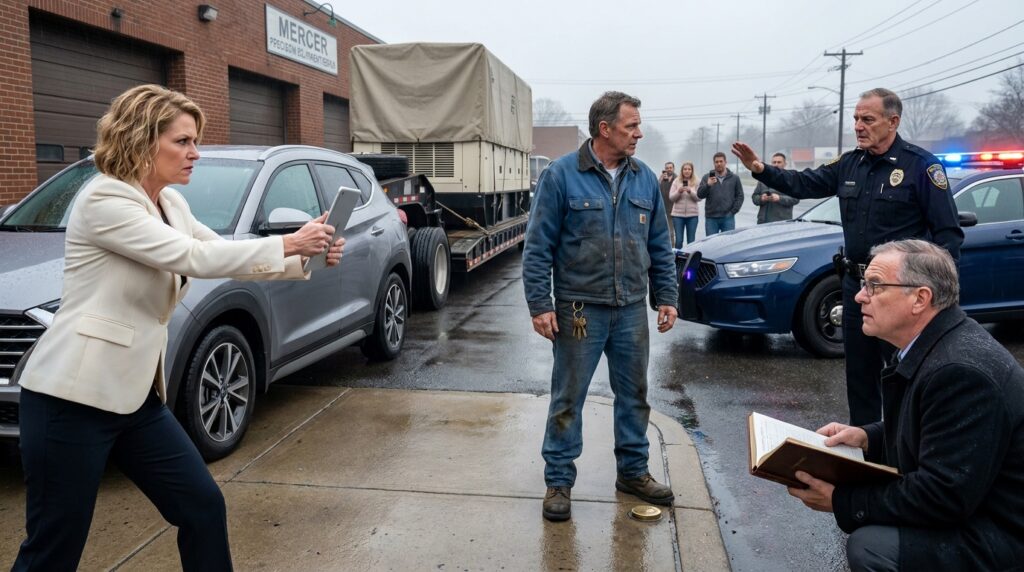
CHAPTER 3: THE COURTHOUSE DIG
“You’re thirty years late for a quiet morning in the basement, Derrick.”
Betty didn’t lift her eyes from the microfiche reader. Her bifocals hung by a braided silver chain against her floral cardigan, catching the sickly green glow of the CRT monitor. She had worked in the county recorder’s vault since the county seat was still paved with river cobblestones, and her fingers moved through the index cards with the dry, rhythmic whisper of corn husks in November.
Derrick set his brass key ring on the scratched oak counter. The iron drawers lining the damp masonry wall smelled of waterlogged ledger paper, dry rot, and old coal soot. “The parcel numbers don’t match the tax map, Betty. I need the ninety-four plat book and the original commercial right-of-way grants for Old Post Road.”
Betty pulled a long steel rod from the index drawer, letting the heavy cardstock dividers spring forward. She reached down, her knuckles swollen with arthritis, and slid a heavy canvas-bound ledger across the worn marble counter. The binding was flaking brown leather, its spine stamped in faded gold leaf: Cedar Valley Commercial Dist. – Vol. IV (1970–1980).
“Your father sat in that exact chair in seventy-four,” she said quietly, pointing her pen toward a low wooden bench near the sump pump well. “He had two rolls of quarter-inch steel strapping, a can of yellow paint, and three silver dollars he swore were lucky. He told the county surveyor that if the road crew moved his curb pin six inches north, he’d weld their grader to the county bridge.”
Derrick opened the ledger. The paper was heavy, cream-colored linen with ruled blue lines. Pages ninety-two and ninety-three contained the hand-inked survey map for Lot 14—Mercer Precision Equipment Repair. There, in faded black India ink, stamped with the raised seal of the County Engineer, was the exact linear measurement: 20.00 FEET PRIVATE DRIVEWAY APRON TO CURB BOUNDARY. The seal was signed by the chief surveyor on October 14, 1974.
The property line didn’t end at the shop doors. It extended past the concrete seam, past the staging area, straight into the brass cap sitting in the gutter.
“It’s clean,” Derrick said, his calloused thumb resting on the cold wax seal. “The easement was never dedicated to the municipality.”
“Now look at the ninety-eight amendment,” Betty said, her voice dropping an octave as she leaned across the counter. Her index finger tapped a fresh white sheet bound into the back of the book with heavy brass rivets. “The year the association registered its charter.”
Derrick flipped to the supplementary page. Attached to the back was a single-page municipal addendum signed by a previous district trustee. It listed the commercial corridor’s aesthetic compliance overlay. But where the property boundaries were listed, someone had hand-drawn a red hatching line over Mercer’s twenty-foot apron, labeling it District Public Promenade Zone (Subject to Board Fine Schedule).
“That’s not a county amendment,” Derrick said, his eyes scanning the bottom line. “There’s no recorder stamp. No board of commissioners signature.”
“No,” Betty said softly. “It was filed as an administrative exhibit by an private attorney. And look at the bank routing code printed on the assessment attachment.”
Derrick pulled out the legal letter Evelyn had left under his wiper blade, laying it side-by-side with the county exhibit. The account number for the Crestview Corridor Beautification Fund matched the deposit line on the amendment. But when he turned to the state business entity registry sheets Betty had pulled from the back filing cabinet, the truth of the fund hit the table with the weight of a dropped anvil.
The Crestview Corridor Beautification Fund wasn’t a civic non-profit. It wasn’t an escrow account managed by the municipal treasurer. It was a single-member Limited Liability Company registered to a suburban mailing address in the next county—the personal residence of Evelyn Pryce, incorporated twenty-one days after she assumed the association presidency.
“She’s pocketing the citation fees,” Derrick said, his jaw tightening until his back teeth gritted together. “She’s issuing fake municipal fines, funneling the money into her own LLC, and using her nephew in the deputy car to make the business owners think it’s official county policy.”
“That’s the decoy, Derrick,” Betty whispered, her eyes darting toward the iron staircase leading up to the main hall. “That’s what she wants you to see if you come down here mad enough to hire a small-claims lawyer.”
Derrick paused, his fingers frozen on the edge of the ledger page. “What do you mean?”
Betty pulled a second, thinner folder from under her desk—a manila folder marked with three red tax-delinquency tabs. She opened it to reveal three public auction notices from the previous two years: the Henderson cabin, the Martinez hardware store, and the old grain feed supply on the corner.
“Every one of those owners got hit with the same five-hundred-dollar citations,” Betty said, pointing to the margin notes written in pencil. “Every one of them refused to pay. Then the association filed administrative liens against their titles. When the owners tried to sell or refinance to clear the debt, the liens blocked the title insurance. They defaulted on their commercial mortgages within six months.”
She slid a yellowed cross-reference slip across the marble. Printed in fine type at the bottom of all three foreclosure certificates was the name of the tax-lien purchaser that had bought the properties on the courthouse steps for pennies on the dollar: Oakridge Regional Development Holdings.
“Evelyn isn’t just stealing seven-hundred-and-fifty-dollar fine checks for pocket money,” Derrick said, the cold realization settling into his chest like a coat of frost. “She’s intentionally clouding the property titles to drive down the commercial appraisals along the entire corridor.”
“The fine checks are just her gas money,” Betty said, taking the ledger back and sliding it into its steel slot with a heavy metal scrape. “She’s clearing the street for someone bigger. And if you don’t clear that truck off your driveway apron before the next board review, your title is the next one she tags.”
Derrick closed his jacket over his father’s deed. He didn’t ask any more questions. He reached into his pocket, laid a silver dollar gently on the marble counter next to Betty’s index file, and turned toward the dark stairs.
Outside, the rain had started—a cold, heavy November downpour that turned the dust on Old Post Road into thick grey slickness. As he pulled his truck back into his driveway, he saw a new piece of hardware sitting on his concrete apron. Two heavy steel wheel clamps, painted bright neon yellow, sat on a wooden pallet right in front of his main bay door, accompanied by a fresh orange notice taped to his service crane.
Derrick didn’t touch the clamps. He walked straight into his office, pulled down the heavy brass key to the attic rafters, and reached for the solar-powered high-definition security camera he had bought three years ago for the shop perimeter.