
CHAPTER 2: PAPERWORK WEAPONS AND ESCALATING DEMANDS
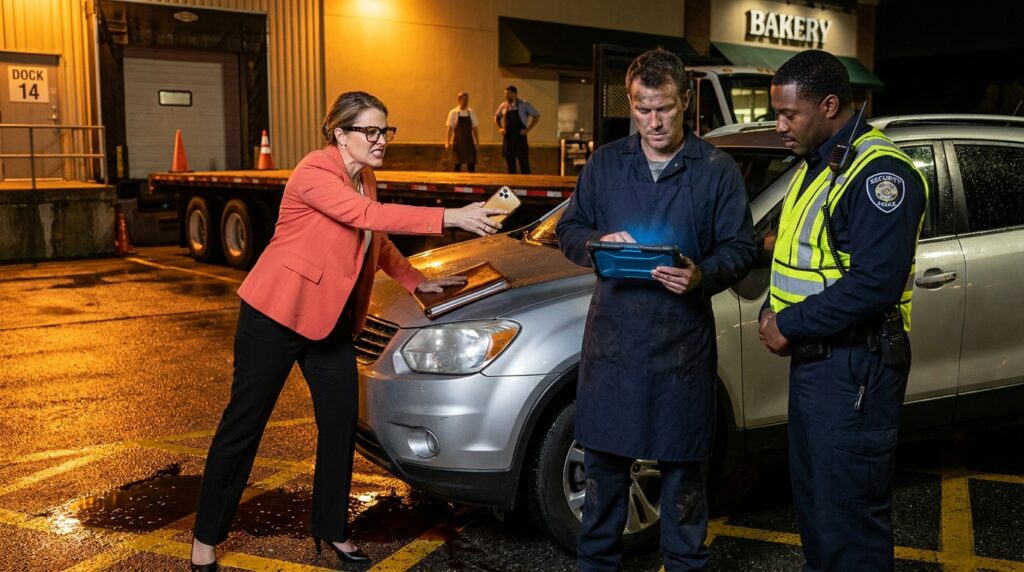
Deborah didn’t flinch. She snapped her binder open, the heavy plastic rings popping like a muffled small-caliber gunshot in the tight alleyway. The harsh overhead halogen light glinted off a fresh sheet of heavy-bond paper pinned right at the front—its white surface blindingly clean compared to the grimy, oil-stained concrete of Dock 14. Near the bottom corner sat a crisp, gold-embossed foil seal that looked less like a routine plaza memo and more like a court order.
“Look at it, Marcus,” she demanded, taking half a step closer to the dock edge and thrusting the binder upward. Her voice remained clipped, designed to project past the idling eighteen-wheeler to where the bakery workers stood watching. “Signed and stamped at 5:00 p.m. today. Emergency Administrative Amendment 11-B. The Merchants Association board has revoked all after-hours dock access for independent retail tenants lacking a primary commercial quiet clearance. That means you.”
Marcus didn’t reach for the paper. Instead, his gaze settled on the edge of the sheet. The gold seal was immaculate, but the font along the top margin didn’t match the standard typewriter-style header used in official Westgate lease attachments. It was a fresh laser-print job, subtle enough to intimidate anyone caught off-guard at midnight, but structured to mimic a legally binding covenant.
Behind the wheel of the rig, Ray leaned out the cab window, his hand coming down hard on the door frame. “Hey! Pallet forty-one has got two tons of green-board sitting over my rear axle! I’m idling on a commercial delivery contract, lady. I turn this rig around now, and your shop gets billed for the haul-back!”
“You will turn it around or you will watch private security put a boot on your steer tire!” Deborah snapped without turning her head. She kept her smartphone locked on Marcus, her finger tapping the recording button. “You are complicit in commercial trespass, driver. I am documenting every second of this willful non-compliance.”
Marcus took two deliberate steps toward the ramp, lowering his center of gravity as he moved. His boots made no sound against the concrete. “Deborah, that document isn’t a city ordinance, and it isn’t a lease modification. You know as well as I do that an association amendment requires a seventy-five percent tenant quorum and a thirty-day notice period filed with the county clerk.”
“This is an emergency public health and quiet-hours directive!” she countered instantly, her voice rising an octave, calculated to establish dominance before any third party arrived. “The residential units across the boulevard have filed three noise complaints this month alone! Your little late-night operation is dragging down the appraisal values of every square foot in this plaza! You think because your father ran this hardware store out of a rusty tool shed twenty years ago that you’re exempt from corporate standards?”
The mention of his father landed like a physical weight, cold and familiar in Marcus’s chest. He felt the phantom pressure of his father’s hand on his shoulder—the old man’s relentless insistence that legal perimeters were built on hard documentation, not shouting matches on a curb. Marcus’s thumb slid across the side button of his industrial tablet inside his navy apron pocket, activating the shop’s local network without pulling the device into view.
“My father built this shop on a registered municipal deed, Deborah,” Marcus said, his voice dropping into a register so quiet she had to stop shouting to hear him. “And Dock 14 sits on a dedicated commercial easement recorded in Volume 42 of the city land records. You don’t have the legal standing to alter a city easement with a binder.”
“We will see what private security thinks about your recorded easement when they arrive in two minutes!” Deborah declared. She stepped closer to the bumper of her silver crossover, leaning her hip against the headlight and folding her arms over the coral blazer. She was locking herself into the space, transforming her vehicle into a physical barricade that blocked both the truck’s entry and its escape route. “Officer Lawson is already en route. And when he gets here, I will personally direct him to issue a formal notice of commercial nuisance and clear this alleyway.”
Marcus looked past her down the dark corridor. A pair of white headlights swept into the alley entrance—the low, slow approach of the plaza’s private security cruiser.