CHAPTER 6: RESTORATION RESTITUTION AND FINAL PEACE
The sharp, clean scent of fresh-sawn white oak replaced the lingering stink of diesel exhaust as the freight driver unstrapped the final stack of timber. Each beam landed on the timber horses with a dull, heavy thud that echoed inside the tall wooden rafters of Silas’s workshop.
Gareth didn’t sit down. His hands were coated in a fine slurry of rain and oak dust as he guided the four-by-eight joists into the dry shelter of the bay. His forearms burned, the familiar ache of physical labor settling into his shoulders—a clean, predictable pain that had nothing to do with courtroom filings or HOA notices.
By two in the afternoon, the freight truck had backed out of Stony Point Lane, leaving deep, clean tire tracks in the wet gravel. The rain had softened to a mist that hovered over the ditch line, barely whispering against the corrugated tin roof.
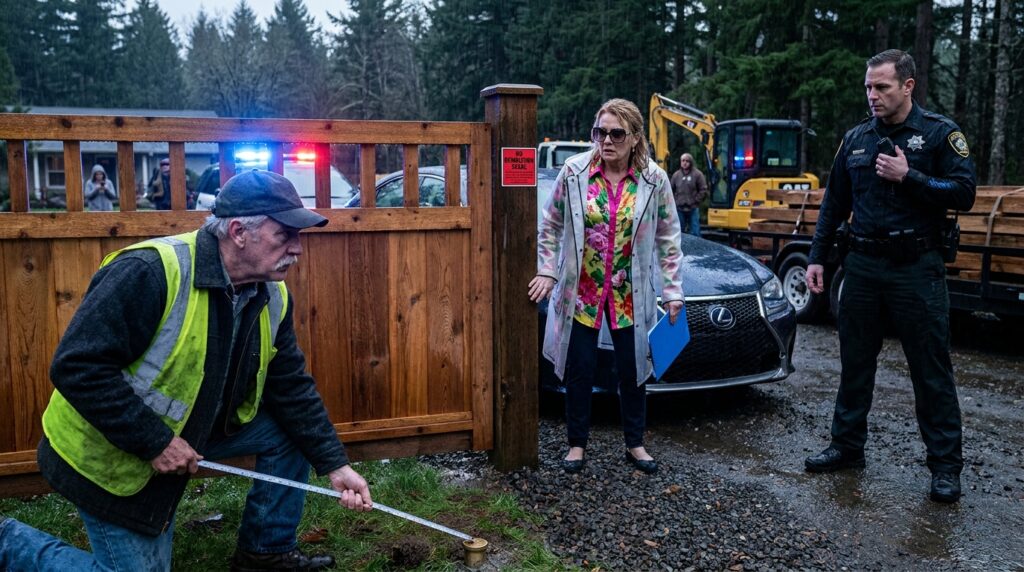
Gareth walked out to the entrance with a bucket of warm water, a stiff bristle brush, and a brass-handled chisel. He knelt beside the main cedar post where Brenda’s red sticker had been slapped. The adhesive had left a tacky, gray square on the wet wood. Carefully, holding the chisel blade at a flat fifteen-degree angle, he scraped away the remaining paper residue, shaving a sliver of cedar no thicker than a moth’s wing until the clean, reddish-gold grain beneath showed through.
As he stood up, he heard the gravel crunch under light footfalls. Nora Albright walked down the edge of the access road, carrying a thermal carafe and wearing a yellow oilskin raincoat.
“She’s already calling emergency board members, Gareth,” Nora said, her voice quiet in the damp air. She gestured back toward the Crown Estates cul-de-sac. “I saw two members of the finance committee pulling into her driveway twenty minutes ago. Word got around fast about the survey cap.”
Gareth wiped his chisel on his canvas apron. “The cap was always there, Nora. People just stop looking down when somebody starts shouting loud enough.”
Nora set the carafe on the flat top of the gatepost. “It wasn’t just the boundary, was it? When Rayford made her flip that folder over, I saw the notes on the back. She promised parking spaces to those developers who bought the lot on the ridge, didn’t she?”
“She pre-sold eight visitor passes for twelve thousand dollars a piece,” Gareth said, his voice flat as iron. “Promised them paved access over my driveway because the ridge lot didn’t have enough turnout space to meet county code. If she couldn’t take my threshold, those developers were going to sue her personally for fraud.”
Nora let out a long breath, watching the mist rise off the ditch line. “She spent six months telling this neighborhood you were a deadbeat holding up community progress. And all the while she was trying to pave a private kickback over your uncle’s concrete.”
“Silas always said an honest man only needs one map,” Gareth said. He reached into his pocket and pulled out his brass six-foot folding rule, sliding the joints closed until it snapped into a neat, compact bar of polished metal. “The rest is just noise.”
By four o’clock, the news had finished its cycle through the neighborhood. Nora wasn’t the only one who noticed. Two other residents from the outer edge of Crown Estates walked down to the lane—not with clipboards or enforcement notices, but with quiet apologies and questions about custom timber work for their own porches. The board had called a formal hearing for the following Tuesday to initiate Brenda’s removal as association president and conduct a full audit of the greenway fund.
Gareth listened, offered polite nods, and kept his answers short. He didn’t need their shame, just as he hadn’t needed their permission.
When the sun finally broke through the trailing edge of the rain clouds shortly before dusk, it cast a long, amber light across Stony Point Lane. The wet cedar of the gate glowed like polished copper against the dark backdrop of the Douglas firs.
Gareth walked to the center of the driveway, caught the heavy iron latch Silas had forged in 1988, and swung the gate shut. The iron tongue dropped into the keeper with a solid, resonant clack that settled deep into the damp earth.
He didn’t padlock it. He didn’t need to.
He walked back toward the open bay of the workshop, where the white oak timbers sat waiting for the scribe and the chisel. Behind him, four feet past the gate, beneath two inches of sod and thirty-eight years of rain, the green-patinaed brass cap rested undisturbed in its concrete bed, holding the line down to the fraction of an inch.
Gareth picked up his mallet, felt the familiar weight of the hickory handle against his palm, and set to work.