CHAPTER 1: THE TRENCH AT THE APRON
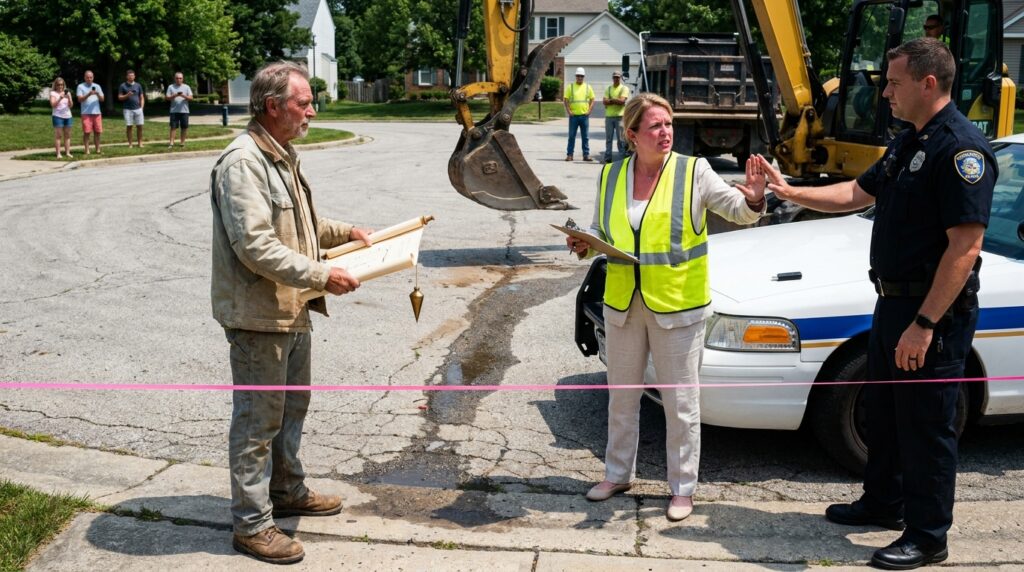
The iron teeth of the excavator bucket hovered four inches above the cracked asphalt of Marcus Holloway’s driveway apron. Heat radiated off the yellow paint, smelling of scorched hydraulic oil and stale diesel fumes. The engine thrummed through the soles of Marcus’s worn leather work boots, sending a steady vibration up his shins as he stood motionless on the gravel shoulder.
“You’re idling on private survey lines, Frank,” Marcus called out, keeping his hands sunk deep into the pockets of his canvas jacket. His thumb traced the cold, sharp tip of the brass plumb bob tucked into his right pocket—a tool his brother Tommy had used thirty years ago when they poured this concrete turn-out with their own hands.
The cab door of the excavator stayed shut, but Evelyn Vance stepped out from the shade of the idling dump truck. Her heels clicked sharply against the dry blacktop. She wore a bright lime safety vest cinched over a tailored linen suit, a heavy stainless-steel clipboard tucked under her arm like a weapon.
“He’s operating on board authority, Marcus,” Evelyn said. Her voice carried the sharp, practiced cadence of someone used to running executive meetings over loud HVAC units. “This driveway apron is officially designated as Phase One of the Boxwood Cul-de-Sac Drainage Mitigation Zone. You received the registered letter.”
“I received a piece of paper signed by you,” Marcus said. He didn’t shift his stance. His eyes stayed locked on the neon-pink survey stake driven directly through the turf six inches from his mailbox. The string tied to it stretched straight across his driveway, coated in wet chalk that drifted off in the summer dust. “The HOA doesn’t hold an easement on this parcel. It never has.”
Evelyn smiled, a thin, functional stretch of lip that didn’t reach her eyes behind her oversized sunglasses. She tapped the steel clip of her board with a French-manicured fingernail. “Article Four, Section Two of the revised community charter gives the treasurer emergency intervention rights over any private structure impeding watershed flow. Your apron is backing up four hundred gallons of standing water into the public curb every time it rains.”
She pointed toward the two workers standing by the dump truck with cans of marking paint. “We are cutting a six-foot trench through this blacktop to lay the culvert before five o’clock today. Your secondary access path through the rear alley has already been designated on the board map.”
Marcus took two slow steps forward, his boots crunching over the loose gravel. He stopped precisely at the pink chalk line. “That rear alley is six feet of unpaved red clay with a ten-degree grade. A delivery truck would slide into the ditch by November.”
“Then I suggest you buy a vehicle with four-wheel drive,” Evelyn replied smoothly. She turned toward the excavator cab and raised two fingers. “Frank, drop the bucket and cut the pilot line.”
The hydraulic lines hissed. The steel bucket dipped another two inches, the teeth scraping against the aggregate with a sound like grinding teeth.
Marcus didn’t run. He didn’t raise his voice. He reached into his left jacket pocket, pulled out a laminated card, and held it flat between his index and middle fingers, resting it against the excavator’s yellow boom arm right at the operator’s eye level.
Frank cut the throttle. The engine dropped to a low, uneasy rattle. Through the glass, Frank squinted down at the card.
“That’s my state surveyor license number, Frank,” Marcus said, his voice carrying clearly under the rumble of the engine. “And this ground beneath your tracks is Parcel 408-A. It was deeded in 1984, ten years before Boxwood Estates bought its first acre of pasture from the county. If that steel hits my asphalt, I’m filing an intentional destruction of property claim against your contractor bond before the bank closes today.”
Frank looked down at Evelyn, his hands resting lightly on the control levers. “Evelyn, you said you had the county right-of-way permit taped to the clipboard.”
Evelyn’s jaw tightened. The plastic coating on her clipboard creaked under her grip. “Drive the bucket down, Frank. The board will hold you harmless.”
“The board doesn’t own your company’s license, Frank,” Marcus added softly.
Before Evelyn could reply, a high-pitched chime sounded from her jacket pocket. She pulled out her phone, glanced at the screen, and her posture stiffened. She tapped the speaker button, holding the phone close to her chin. “Evelyn Vance.”
“Ms. Vance,” a voice rasped through the speaker, distorted by wind. “This is the county recorder’s field office. We just processed that emergency easement request you submitted online an hour ago.”
Evelyn shifted her weight, stepping away from Marcus toward the curb. “Yes, I’m at the site right now with the contractor. We are executing the drainage cut.”
“You need to halt operations immediately,” the clerk’s voice cut back, sharp and unvarnished. “The parcel number you entered doesn’t match the subdivision boundary grid. That land belongs to an independent deed holder, and there’s a red-flag restriction on the electronic file.”
Evelyn snapped the phone off-speaker and pressed it tight to her ear, her face flushing crimson beneath her oversized glasses as she glared at Marcus.