Chapter 4: What the Neighbors Saw
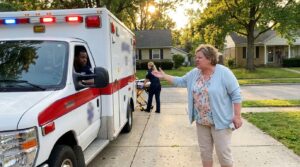
By late afternoon, the emergency vehicles were gone.
The street was quiet again.
But the incident had not disappeared.
Karen drove her SUV home after finally removing the wheel lock herself.
She expected the neighborhood to return to normal.
It didn’t.
People who normally waved at her suddenly looked away.
Others watched her from porches.
Someone had taken photographs.
Someone else had written down the time.
And the board of the condominium association had received several complaints.
Karen was furious.
She believed she was being punished for enforcing community standards.
The board president, Elaine Mercer, invited her to a meeting the following morning.
Karen arrived carrying a folder.
Inside were printed copies of parking rules, photographs of vehicles, and pages of notes she had kept about previous incidents.
She was prepared to prove that she had been right.
Elaine listened.
For nearly twenty minutes, Karen explained why the SUV had been improperly parked.
She described previous parking problems.
She described how residents ignored the rules.
She described why she believed someone had to take responsibility.
Elaine finally raised one hand.
“Karen, nobody is asking whether the SUV had been parked correctly.”
Karen stopped.
“Then what’s this about?”
“The emergency access.”
Karen frowned.
Elaine slid a document across the table.
It was the community’s emergency access plan.
The roadway Karen had blocked was specifically designated as a clear emergency route.
Karen stared at the page.
She had never seen it before.
She immediately objected.
“That doesn’t mean they can just drive wherever they want.”
Elaine shook her head.
“No one is saying that.”
“Then why am I being blamed?”
“Because your vehicle was physically preventing emergency access.”
Karen’s face flushed.
“They could have gone around.”
“They did.”
Elaine paused.
“That’s the problem.”
Karen looked confused.
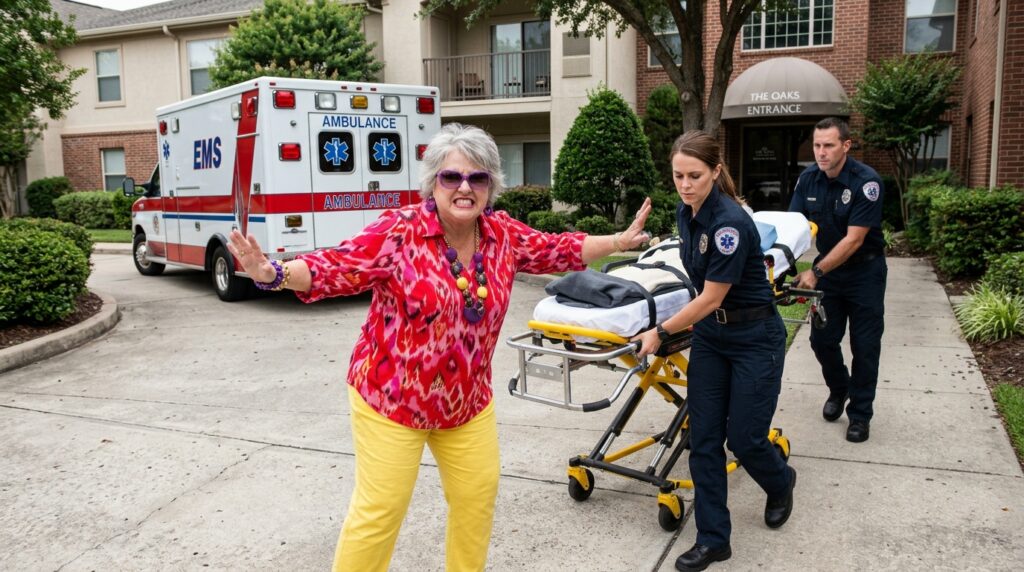
Elaine explained that the emergency crew had been forced to change its approach because of the obstruction. The second fire engine had been delayed behind the first. The ambulance team had also needed to use the side entrance.
Karen crossed her arms.
“But nobody died.”
The room went silent.
Elaine’s expression changed.
“That isn’t the standard.”
Karen looked down.
She realized immediately that she had said the wrong thing.
Not because it wasn’t technically true.
Because it revealed how far her thinking had shifted.
The issue was no longer whether someone had actually been harmed.
It was whether she had created a risk that no resident should have to face.
Elaine closed the folder.
“The board isn’t asking you to admit you were wrong about every parking complaint you’ve ever made.”
Karen said nothing.
“We’re asking you to understand that private disagreements stop mattering when emergency access is involved.”
Karen picked up her papers.
She left without apologizing.
But in the parking lot, she sat in her SUV for several minutes before starting the engine.
For the first time, she looked at the wheel-lock device sitting on the passenger seat.
It suddenly seemed much heavier than it had that morning.