Chapter 6: The Door That Stayed Open
Two months later, another alarm sounded.
This time, it was real.
Smoke came from an electrical panel in the clubhouse.
The emergency response plan worked.
Residents moved away from the building.
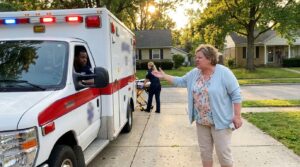
The fire department arrived.
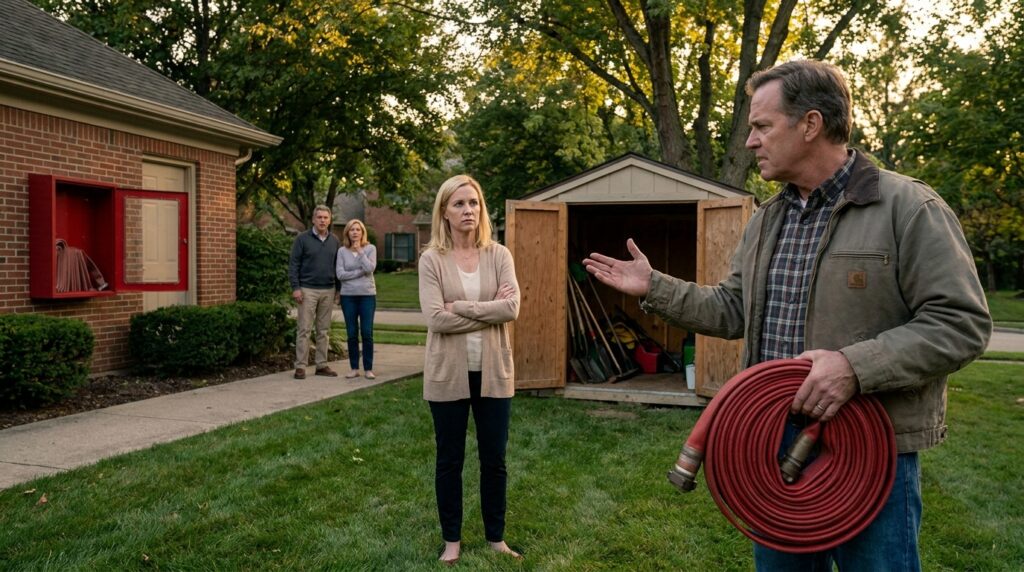
The hose cabinet opened immediately.
The equipment was accessible.
Nobody had to search.
Nobody had to argue.
Karen stood beside Margaret in the parking lot as firefighters worked.
She watched the red hose disappear into the clubhouse doorway.
Then she quietly said something Margaret almost didn’t hear.
“I was wrong.”
Margaret turned.
Karen kept looking at the building.
“I thought if I controlled everything, nothing bad could happen.”
Margaret waited.
Karen swallowed.
“But I almost made something bad happen myself.”
It was not a dramatic apology.
There was no crowd.
No applause.
No public humiliation.
Just an older woman finally acknowledging that protection without trust could become another form of danger.
Weeks later, the HOA held its annual neighborhood picnic.
The emergency cabinet stood beside the clubhouse, clean and unobstructed.
A bright blue stripe marked the hose.
The shed remained unlocked.
Tom walked past Karen carrying two folding chairs.
For a moment, they simply looked at each other.
Then Karen held out one of the chairs.
“You want help?”
Tom smiled faintly.
“Sure.”
They carried the chairs together.
Karen never became the person everyone suddenly loved.
Tom never forgot what she had done.
The board never restored her authority over emergency equipment.
But something more practical happened.
Residents stopped whispering when Karen walked by.
Karen stopped keeping private lists.
She began attending safety meetings instead of policing neighbors.
And every month, she checked the emergency cabinet with another volunteer—not because she owned it, but because everyone did.
The hose remained exactly where it belonged.
Behind glass.
Accessible to anyone who might need it.
And for the first time, Karen understood the difference between having control and being responsible.
One belonged to her.
The other belonged to the whole community.