CHAPTER 6: THE CAVITY IN THE WALL
The heavy drape in the living room swelled inward like a black sail as outside air rushed through the spiderwebbed puncture in the glass.
Miller shoved Martha ahead of him, his boots skidding across the polished parquet floor as he rounded the corner into the dining room. Plaster dust drifted down from the ceiling like cold flour, coating his tongue with the bitter taste of pulverized lime.
“They’re flanking the driveway,” Miller said, dropping low beneath the sill of the rear sash window. “Reynolds wants us driven toward the back fence where there’s no street view. We don’t go out that door.”
Martha had her hands clamped against her chest, her fingers tangled in the faded embroidery of her blouse. Her breath came in short, raspy hitches, but her eyes had snapped out of the vacant shock that had paralyzed her on the walkway. The sound of Reynolds racking the slide on the pavement had burnt away the numbness, leaving behind the hard, sharp terror of someone who finally recognized an executioner.
“He asked for Michael’s safe,” she whispered, her gaze darting toward the base of the dining room wall where a low, stamped-metal air return was screwed into the baseboard. “The morning after the state troopers came to tell me about the crash on Route 9. Reynolds sat right at that mahogany table. He brought an envelope with company condolences. Then he asked if Michael kept any work manifests or hard drives in the house.”
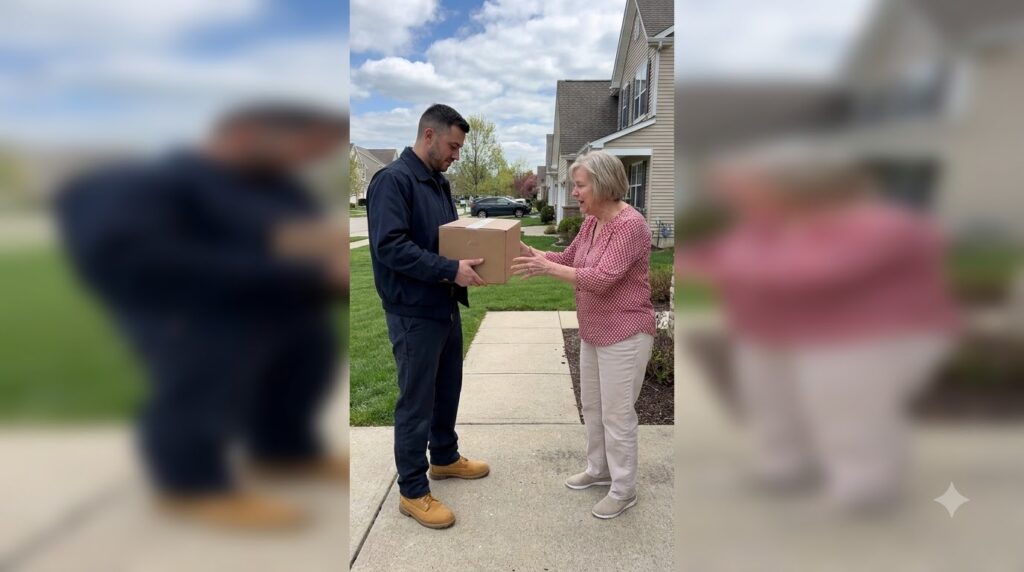
Miller set the battered carton down on the floorboards, keeping his back pressed flat against the wall beneath the window frame. Outside, the gravel along the side yard gave off a distinct, crushing crunch—the deliberate weight of someone moving slowly, scanning ground-level angles. Cole was limping, but he was moving.
“What did you tell him?” Miller asked.
“I told him Michael kept everything in his locker down at the rail yards,” Martha said. She dropped to her knees, heedless of the glass grit biting into her slacks, and jammed her fingernails beneath the painted louvers of the air grate. “I lied. Michael called me forty minutes before the state police said his brakes failed. He told me if anything happened to his rig, I wasn’t to speak to company reps, and I wasn’t to let anyone touch the return vent in this room.”
She tugged at the grate. The four wood screws holding the vent cover had already been backed out of their anchors; only decades of old enamel held the iron lip against the baseboard. With a dry, tearing rip, the paint gave way.
Inside the dark sheet-metal cavity, nestled between the joists beneath a thick blanket of gray duct felt, sat a flat, olive-drab steel lockbox. It was no larger than a shoebox, secured with an industrial pin-tumbler padlock.
Miller reached into his jacket pocket and pulled out the brass key he had sliced from the underside of the parcel—HUB-B7.
The key slid into the lockbox cylinder with a smooth, oiled click. The brass plug turned a quarter-inch, and the heavy lid popped open against its internal spring.
There was no cash. No ledgers of kickbacks.
Resting inside the foam cutout was a sealed manila file bearing the red foil embossment of the National Transportation Safety Board, and alongside it, a carbon-copy manifest duplicate.
Miller unfolded the top document under the dim light filtering through the hallway. His eyes tracked the typed courier codes, his pulse hammering against his ribs.
It was an internal hazardous freight diversion order dated fourteen months prior. The cargo was listed as synthetic stabilizing agent AZ-40, hauled in forty-ton tanker cars. Beneath the chemical breakdown was a scanned photograph of a ruptured pressure valve, covered in the exact same chalk-white, crystalline residue currently sitting in the four plastic bricks beside his knee.
The rail rupture hadn’t been an act of god, and it hadn’t been an equipment anomaly. The report detailed an illicit chemical leak at the central terminal that contaminated two regional groundwater spurs—a catastrophic liability that would have revoked the company’s operating charter across seven states.
Miller flipped the page, and the air froze in his throat.
Stapled to the back of the transfer order was a chain-of-custody release form for the four forensic sample bricks. It authorized their removal from the secured corporate evidence vault for off-site incineration.
The signature at the bottom was clean, firm, and dated three days after Michael Vance’s fatal crash on Route 9.
Beside the signature was the printed employee identifier: M. VANCE — DISPATCH CLEARANCE ACTIVE.
“They didn’t just use his name to route the package today,” Miller said, his voice dropping to a harsh whisper. “They used his name to sign off on the destruction of the chemical evidence after he was already in the morgue. And when the regulatory auditors scheduled a surprise inventory check at the hub this morning, they had to pull the bricks out of the facility before the state inspectors opened the vault.”
Martha stared at the paper, her lower lip trembling violently. “They killed him to keep him quiet… and then they kept him working to take the fall.”
A sudden, sharp blast tore through the kitchen door at the far end of the hallway. The wood exploded inward into jagged laths, and the heavy silhouette of Reynolds stepped into the corridor, pistol leveled at chest height.