CHAPTER 2: THE SEAL ON THE TIN
The brass key turned in the padlock with a gritty, dry snap that echoed through the quiet of the old timber workshop.
Ray didn’t turn on the overhead fluorescent tubes. The pale morning light filtering through the high, grease-filmed windows was enough to illuminate the workbench—a solid six-inch slab of hard maple his father had bolted to the wall studs before Ray was born. The air in the shop smelled of mineral spirits, cold iron, and the dry, sweet dust of aged white oak.
He dragged the heavy green metal deed box out from behind the rack of hand-forged pry bars. Its steel corners were pitted with rust, and the handle had long since lost its black enamel, worn down to bare, dull metal by forty years of his father’s calloused grip.
On top of the lid sat a small lead security seal, stamped with a long-obsolete county registry emblem. Ray traced the cold metal with his thumb. His father had placed that seal on the box in the fall of 1992, the year the township first tried to widen the culvert at the bottom of the ridge. He hadn’t broken it since the day the old man was buried.
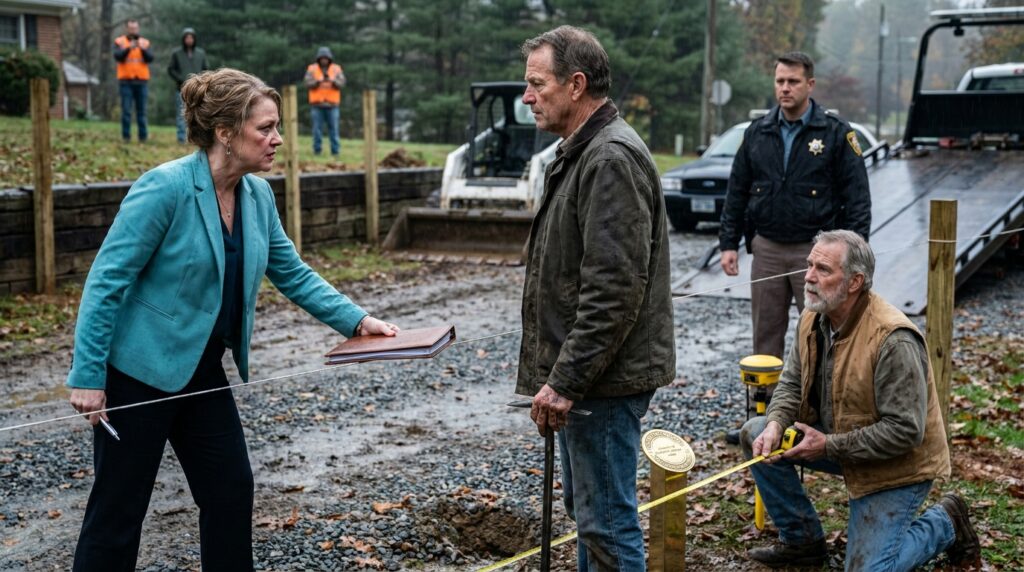
Outside, the distant, rhythmic thump-thump-thump of the skid-steer’s hydraulic auger vibrated through the concrete floor, rising up through the soles of Ray’s work boots. Brenda wasn’t waiting. She was setting the line.
Ray slipped the blade of a pocketknife under the lead seal and twisted. The soft metal sheared away with a dull pop. He lifted the heavy lid.
Inside lay layers of folded paper, crisp with age and smelling faintly of tobacco and cedar shavings. On top was the original 1984 land survey, its blue-ink lines faded to a chalky purple against the linen paper. Ray spread it out over the maple bench, flattening the stubborn creases with the palms of his leather work gloves.
The brass corner marker was clearly inked at the south-west nexus: Parcel 40-A, Non-Incorporated County Soil. The line drawn by the county surveyor forty years ago was straight, absolute, and unyielding. It ran two feet outside the oak timber wall, encompassing the entirety of the gravel drive.
Beneath the blueprint, however, lay a second, thinner folder made of cheap yellowed manila.
Ray pulled it out. Stamped across the tab in red ink was a title he hadn’t seen in three decades: Township Drainage Corridor Proposal – 1992 (Pending).
He opened the folder. Inside was a legal draft, signed by three long-deceased township councilmen, outlining a municipal takeover of the shoulder land along Old Mill Lane. According to the typed clauses, the township had sought to condemn a ten-foot strip of Ray’s driveway to construct a concrete spillway for the burgeoning suburban developments further up the ridge.
Ray’s brow furrowed. He turned the page. Attached to the back was a formal notice of intent, claiming the right-of-way had been integrated into the county water management plan due to an unpaid infrastructure lien.
The auger outside suddenly cut out, replaced by the high-pitched metallic whine of a power saw slicing through treated timber. Brenda was already trimming the fence posts.
Ray stared at the yellowed 1992 document. The text was clear, the legal jargon precise. If Brenda had pulled this exact filing from the township archives, she wasn’t just guessing; she was holding a document that, on its face, made it look like his father had surrendered the shoulder thirty years ago. It was a half-truth wrapped in official stationery—a decoy strong enough to convince a county tow operator or a sheriff’s deputy on a quick sweep.
He reached deeper into the green box, looking for the final release papers, but his fingers hit the bare tin bottom. The folder was incomplete. There was no official record of cancellation stapled to the back, no final stamp from the county recorder confirming the proposal had died.
Ray closed his eyes for a brief second, the rustle of the dry paper loud in the silent shop. His father had never mentioned a lien. He had never mentioned losing a foot of the driveway. But the paper in Ray’s hands lacked the final court seal, leaving a gaping hole right where his legal defense needed to stand.
He didn’t panic. Panic was a waste of momentum. He reached for the heavy black landline telephone mounted on the shop pillar, dialed the seven-digit number for Miller & Associates—the independent land survey firm in the county seat—and waited through four long rings.
“Miller Surveying,” a tired voice answered over the static.
“This is Ray Garland on Old Mill Lane,” Ray said, his voice flat, steady, and unhurried. “I need an crew on site with a digital GPS rig before noon. I’ve got a crew digging up my dad’s corner monument.”
There was a pause on the line, followed by the rustle of a notepad. “Ray? We’re backed up three weeks with the new subdivision plats near the highway.”
“I’m not asking for a full parcel audit, Jim,” Ray said, his eyes tracking the red line on the faded 1984 blueprint. “I just need you to bring the register book and verify the brass cap buried under the pine needles at the corner of my lane. And bring a deputy if you can reach dispatch.”
“What’s going on out there?”
Ray looked out the workshop window. Across the gravel yard, a white commercial tow truck with heavy steel boom arms was backing down the slope toward his parked Ford pickup, its yellow warning lights strobing against the grey morning sky. Stand-in specters from Crestview Estates were gathering along the asphalt, watching Brenda point her silver pen at his front tire.
“Brenda Albright thinks she bought my father’s dirt,” Ray said, slipping the 1984 plat map into his canvas jacket pocket. “Come tell her who owns the iron.”
He hung up the receiver, grabbed his heavy iron pry bar from the wall rack, and stepped back out into the cold morning air.