CHAPTER 1: THE EDGE OF THE GRAVEL
The diesel auger bit into the damp gravel with a wet, grinding shriek that vibrated straight through the floorboards of the porch.
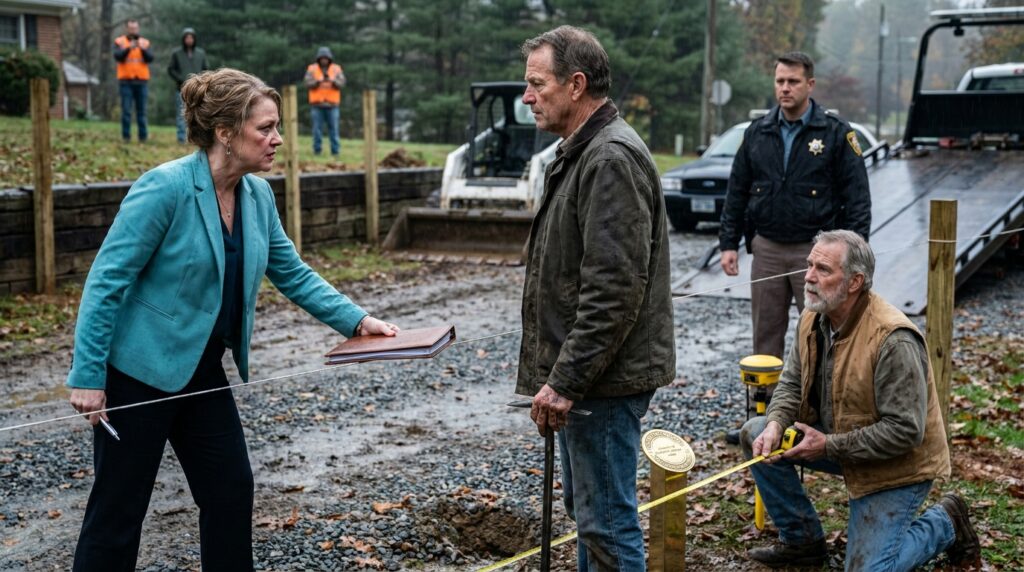
Ray Garland didn’t drop his mug, but the dark liquid inside sloshed against the rim, coating his knuckles. Through the rising curtain of blue exhaust and morning mist, he watched a skid-steer loader tilt its bucket, dumping a pile of freshly churned earth onto the edge of his access lane. Four men in orange high-visibility vests were already unstacking treated six-by-six posts from the bed of a heavy flatbed pickup.
Directly in front of the machine stood Brenda Albright. Her turquoise blazer stood out like a chemical spill against the damp green pine needles bordering Old Mill Lane. She didn’t look at the dirt flying toward her heels; her dark sunglasses were fixed on the porch, her thumb rapidly clicking the top of a silver ballpoint pen against a thick leather binder.
Ray set the coffee mug down on the weathered porch rail, the ceramic making a dull thud against the cedar. He didn’t rush. He pulled his leather work gloves from the back pocket of his faded jeans, smoothing the stiff leather over his palms as he walked down the three timber steps his father had notched into the slope forty years ago.
“The corner stake is three yards back toward the asphalt, Brenda,” Ray said, his voice carrying easily over the clatter of the idling skid-steer. He didn’t raise his tone; he let the words sit heavy in the morning air.
Brenda didn’t step back as he approached. Instead, she pivoted, her heels sinking an inch into the soft shoulder dirt. She snapped the leather binder open, angling it so the gold-embossed logo of the Crestview Estates Homeowners Association caught the grey morning light.
“This access corridor was integrated into the township master drainage buffer three months ago, Mr. Garland,” she said, her voice piercing, practiced, and devoid of tremor. She pointed the silver pen at the fresh six-foot hole yawning in the middle of Ray’s driveway. “You’ve been operating an unpaved commercial egress over community land without paying the infrastructure maintenance assessment. This fence line is being established to secure the easement boundary.”
A young worker leaning against the skid-steer held a post erect over the hole, his eyes darting nervously between Brenda’s pristine blazer and the grease-stained canvas jacket Ray wore. Down along the asphalt entrance of the subdivision, two residents out walking a golden retriever slowed their pace, their heads turning toward the gravel drive.
Ray stopped two feet from the freshly dug hole. The smell of crushed pine needles, damp clay, and raw diesel fumes filled his lungs. He looked down at the dark soil piled over his gravel.
“You’re standing on private county land, Brenda,” Ray said softly. He reached into his jacket pocket and pulled out a worn brass-keyed ring, holding it steady. “And your boy with the auger just cut through two feet of my crushed slate.”
“Your deed is outdated,” Brenda shot back, her silver pen clicking once, twice, three times in rapid succession. “The board registered the plat modification with the county clerk’s office on the first of the month. You have until twelve o’clock to clear your pickup truck from the corridor, or I’m having the county impound rig haul it off.”
Ray looked past her shoulder, tracing the string line the crew had stretched across his driveway. It cut straight through the low timber retaining wall his father had built out of hand-hewn oak sleepers—the wall that kept the slope from washing onto the road every winter. Underneath the lowest timber, half-buried in forty years of decaying leaves, sat the iron pin his father had driven into the earth with a ten-pound sledge.
“You can dig all the holes you want, Brenda,” Ray said, his eyes locking onto her dark lenses. “But dirt doesn’t change a county deed.”
Brenda didn’t flinch, but her jaw tightened, a thin muscle twitching along her neck. “We’ll see what the tow operator says at noon, Mr. Garland.” She turned abruptly to the foreman. “Set the corner post. Right here.”
Ray didn’t touch the string line. He turned his back on the turquoise blazer, his work boots crunching steadily in the gravel as he walked back toward the house. Behind him, the skid-steer roared, its steel tracks grinding into the stone, but Ray was already calculating the time it would take to drive down to the courthouse basement and pull the sealed 1984 tax register from the bottom drawer.